Consultation rooms
Private spaces for clinical assessment, counselling, and physician-patient discussion.

A regional cancer care platform bringing advanced oncology services to underserved communities across Africa through a mobile, sustainable healthcare model. Status: Concept Development
African Sahara Charity Foundation's flagship project is a specialized, self-contained oncology hospital aboard a mobile maritime platform, designed to bring advanced cancer care directly to coastal and riverine communities that currently lack access to specialist treatment.
The hospital is conceived as a scalable regional platform, not a project designed to relocate between locations. The design applies the Foundation's long-horizon approach: sustainable operations, local partnership, capacity building, and a lasting in-region presence.
This page describes design intent and the vision being developed. No operational clinical services exist today.
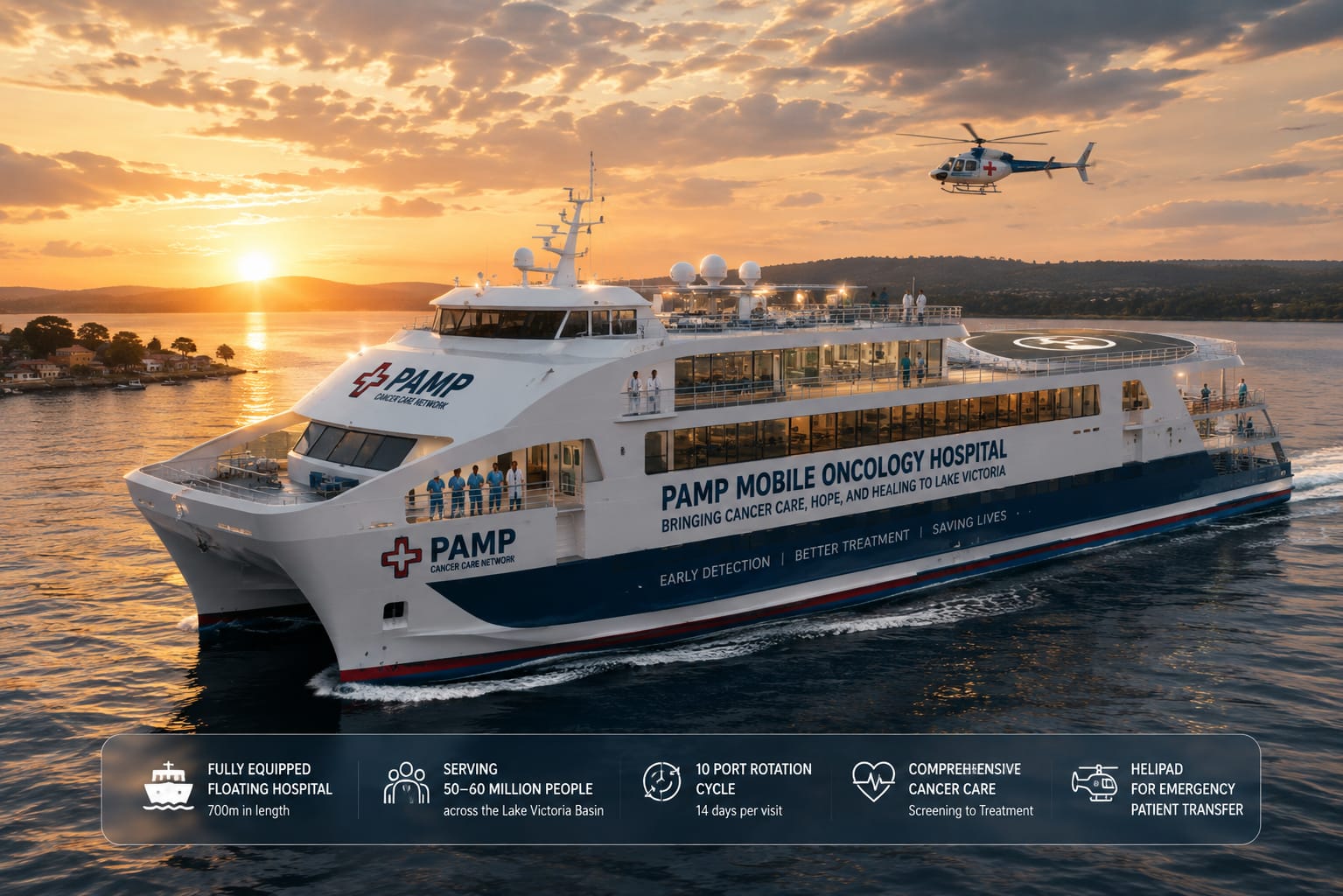
Cancer is a growing health challenge across Africa, yet the infrastructure to diagnose and treat it remains unevenly distributed. The project addresses a set of specific, documented gaps:
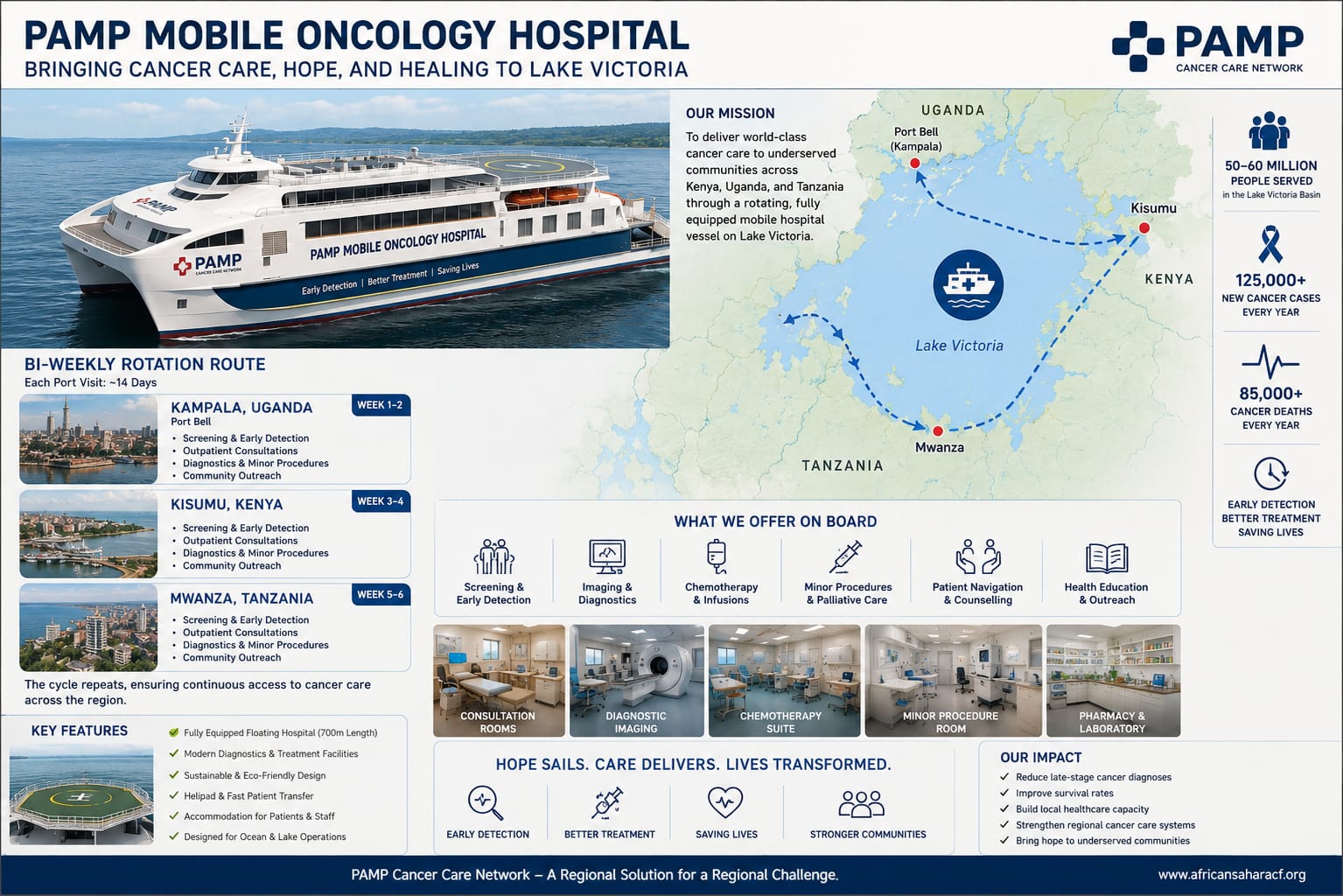
A mobile oncology platform can bring advanced cancer services to communities that would otherwise remain outside the reach of a fixed facility. The concept is anchored in a simple principle: move specialized care to where the people are, rather than require patients to travel long distances to receive it.
The platform is being explored as a vessel adapted for a medical role and supported by shore-based facilities, designed to be a sustainable, health-oriented asset integrated into a broader regional care network.
The onboard environment is intended to function as a complete clinical facility, designed for patient dignity, clinical quality, and operational continuity. Planned clinical functions include:
Private spaces for clinical assessment, counselling, and physician-patient discussion.
Radiology, ultrasound, and imaging capacity to support screening and staging.
A pharmacy and preparation area for the safe provision of systemic therapy.
Space for minor surgical and biopsy procedures under appropriate clinical standards.
Recovery, accommodation, and support spaces designed for patient dignity and safe care.
Monitoring, imaging, and digital systems engineered to the clinical needs of the platform.
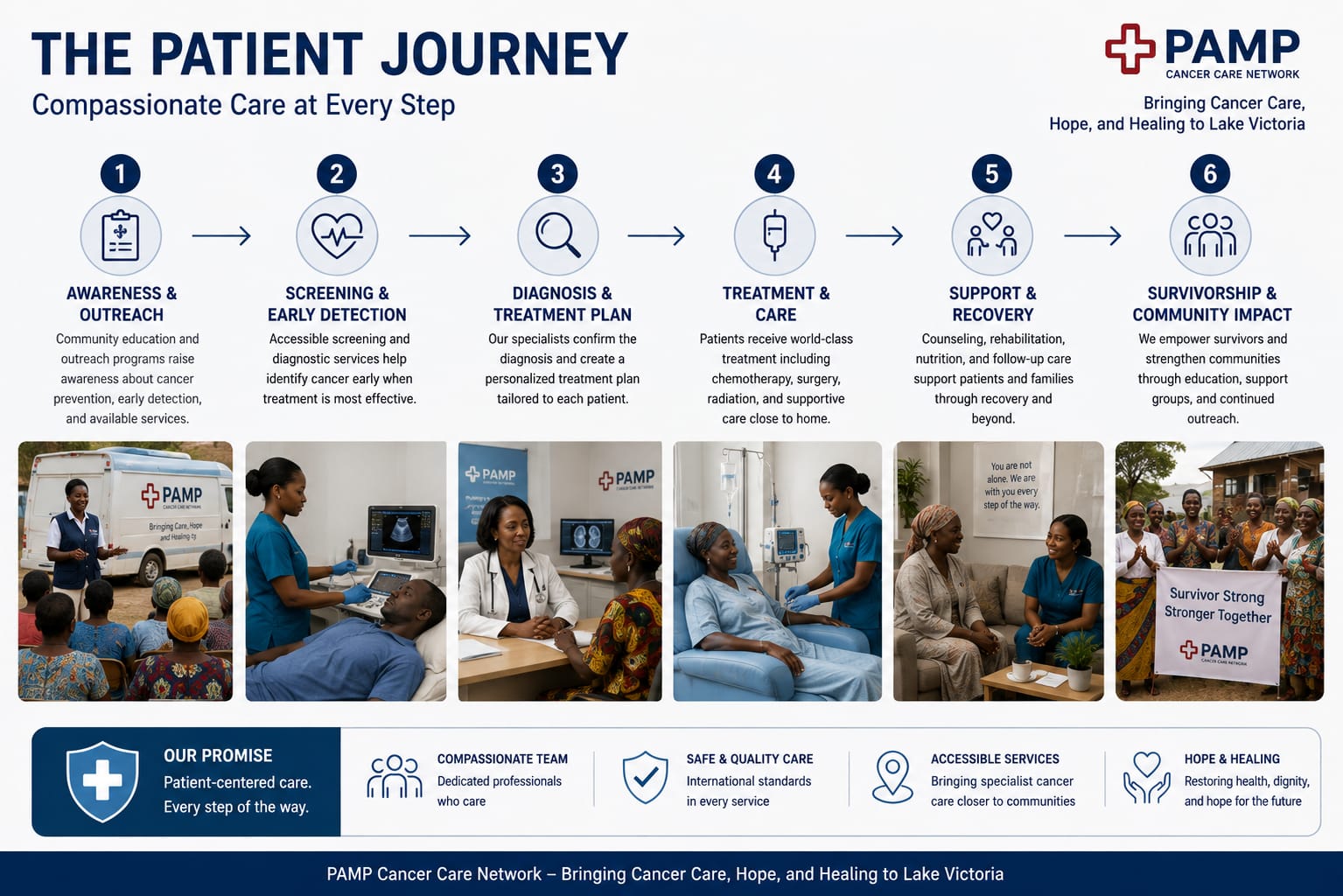
The patient experience is designed as a continuous, coordinated pathway — from first contact through referral and long-term follow-up — rather than as isolated visits. The planned stages are:
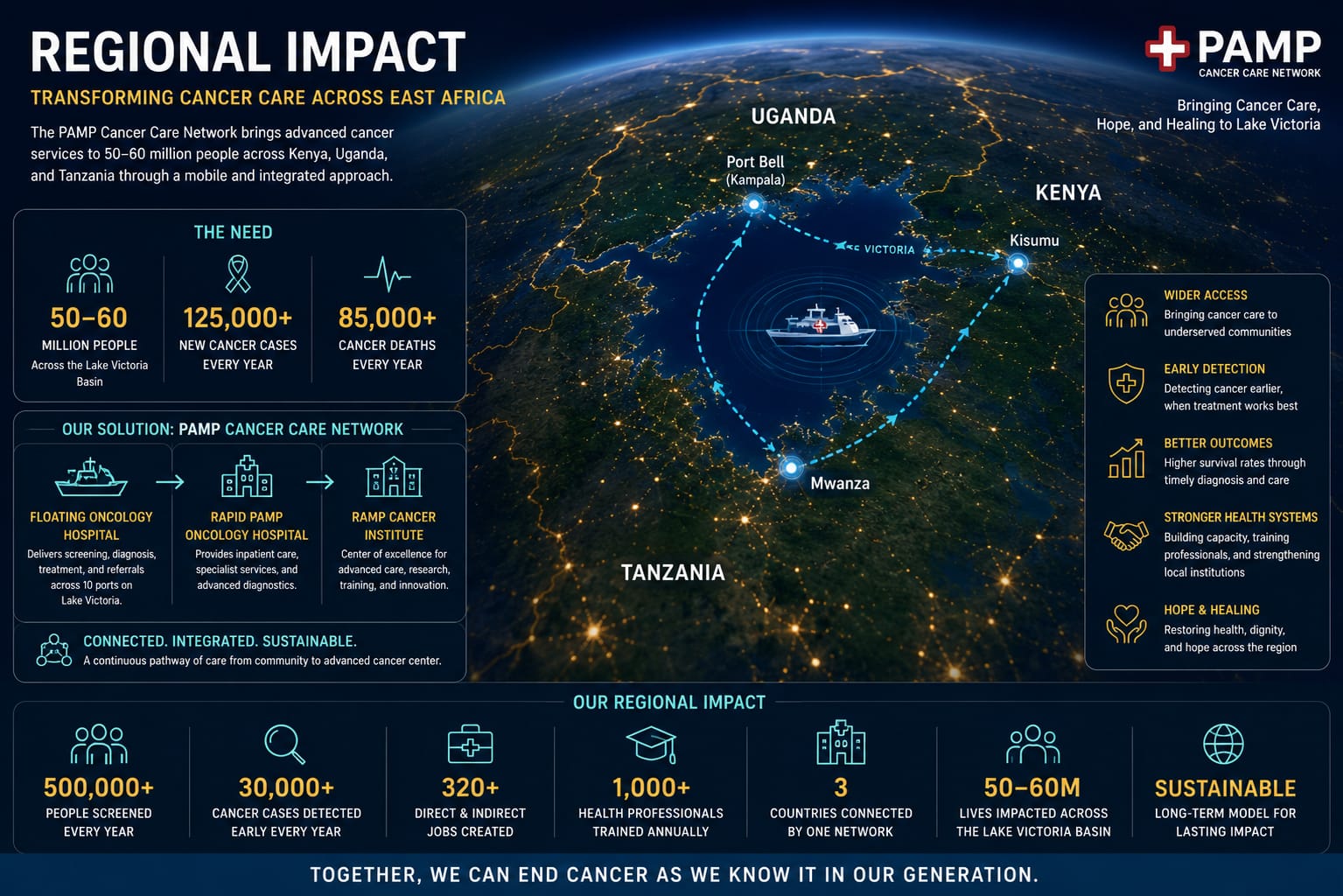
The project is designed to contribute beyond the delivery of clinical care — as a platform for regional capacity building and institutional development.
Planned areas of impact include:
Building a project of this scale and ambition will require sustained, institutional partnerships. The Foundation expects to engage a range of partners as the project advances:
Ministries of health and national cancer programs for regulatory alignment, integration, and accreditation.
Academic partners for research, research capacity building, and academic integration.
Clinical partners for rotations, referral pathways, and specialist support.
Institutional funders and development finance institutions supporting durable health infrastructure.
Complementary humanitarian and health organizations with aligned missions.
Private sector partners able to contribute expertise, logistics, and resources.
Medical technology and imaging suppliers supporting clinical fit and technical sustainability.
Philanthropic foundations supporting early-stage development and capacity building.
Individual donors supporting specific clinical, training, and operational components.